2027 GUIDE TO THE NEW ADU LAWS IN CALIFORNIA

Posted On October 28, 2026

It is now easier and more affordable to get ADU plans approved.

Accessory Dwelling Units (ADUs) and Junior Accessory Dwelling Units (JADUs), commonly referred to as Granny Flats or Guest Houses, have become very popular for many reasons:

  • ADUs add value to your property.
  • Are an affordable construction option, especially for garage conversions.
  • Provide a source of rental income, especially as rental prices increase.
  • Provide affordable housing for extended family, while maintaining privacy.
  • Provide flexibility of shared living areas while allowing seniors to age in place.

The new ADU laws in California for 2027 introduce changes to detached ADU allowances, permitting requirements, fees, and more. New laws lifting restrictions continue to make it faster, easier and more affordable to build Accessory Dwelling Units. Because of the new laws, California ADU construction has surged. By 2027 it is estimated that over 200,000 ADUs will be permitted since the first ADU reform bill passed in 2016.
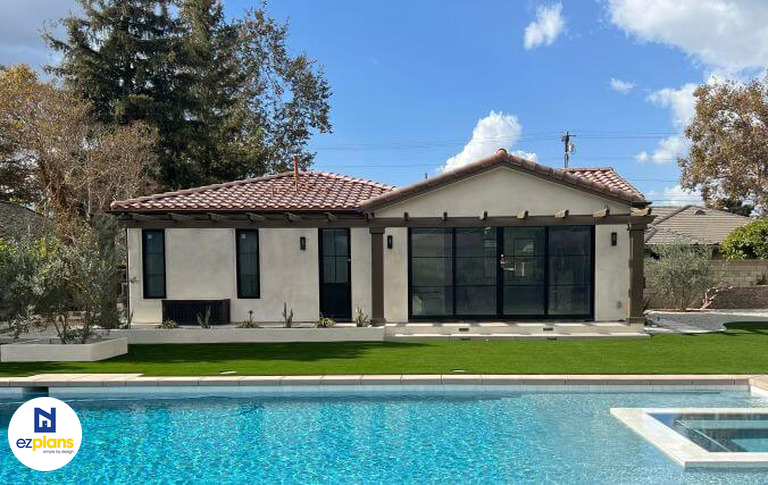
New spanish style detached ADU designed and permitted by EZ Plans though Los Angeles County.
General Guidelines

As of 2027 here is what California law allows homeowners to build:

Single Family Homes:

  • One attached ADU (up to 1,200 sq. ft.) and one Junior ADU (up to 500 sq. ft. and contained entirely within an existing single-family structure) per lot.
  • One detached ADU (up to 1,200 sq. ft.) that is new construction, existing structure, or the same footprint as the existing structure, along with one JADU.
  • Two new detached ADUs of up to 800 sq. ft. each.

Setbacks:

  • Maximum side and rear setback is 4 feet for new or attached ADUs.
  • Front setbacks must meet local zone rules.
  • Front setback cannot be used to block an ADU of up to 800 sf from being built on the property.
  • Zero setback is required for conversions of existing structures to an ADU.
  • Separation distance required  between the main house and a detached ADUs is 5 to 10 feet, depending on local building codes.

Height Restrictions:

  • 16 ft: Allowed under any circumstances.
  • 18 ft: Allowed if the proposed ADU is within ½ mile of public transit or the property already has a multi-family dwelling two stories high.
  • 25 ft: Allowed if the ADU is attached to the primary dwelling, depending on the underlying zoning code of the property (the lowest will apply).

Multi-Family Developments:
Additional units can be added to existing multi-family buildings like apartment complexes. Building owners can convert any non-habitable rooms, like attics, basements, garages, etc. into legal additional units.
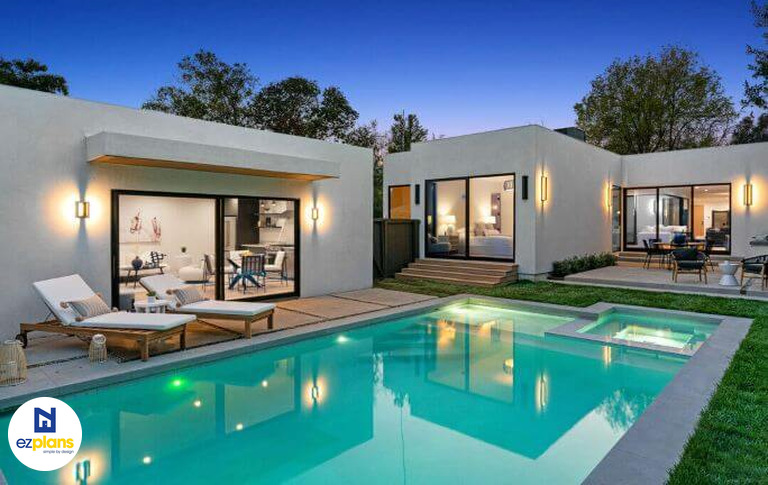
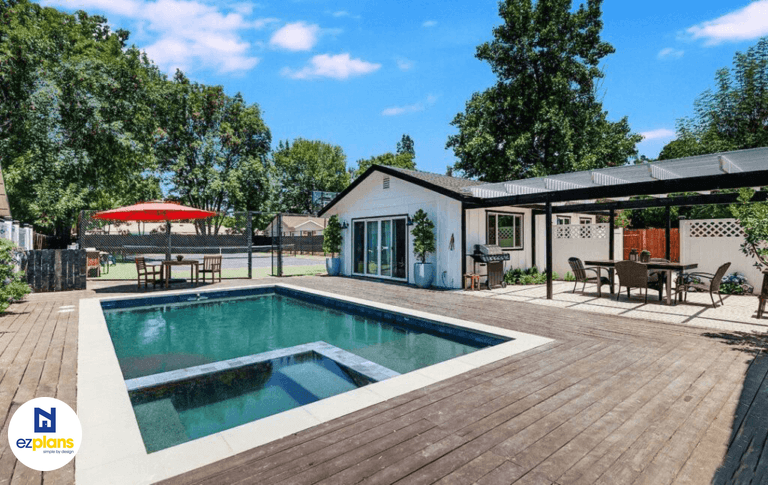
New contemporary home and ADU next to resort-style pool designed by EZ Plans Architects.
New California ADU Laws for January 2027

AB 956 – Allows Two Detached ADUs

Streamlined approval for up to two new detached ADUs on a property with an existing or proposed single family home.

  • Both new detached ADUs can be up to 800 sf of livable space each.
  • Must comply with four-foot side and rear yard setbacks.
  • This law explicitly prohibits HOAs from blocking ADUs that comply with state law. 
  • Local agencies are not required to approve a JADU on the same lot that has two detached new construction ADUs.

SB 1117 – Changes ADU Impact Fees 

Current law exempts ADUs of 750 sf or less from impact fees. SB 1117 will limit the impact charge to only the sf that exceeds 750 sf. 

SB 1196 – Public Utility Timelines 

Establishes timelines for CA Public Utilities to accelerate utility hookups and electrical service connections for ADUs in 2027.
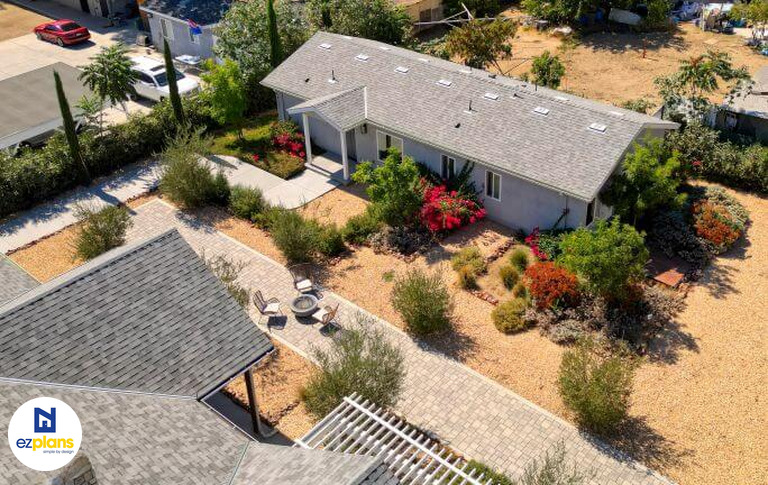
Aerial view of a new detached ADU in Los Angeles designed to meet size, setback and height requirements.
ADU Laws 2026

AB 2533 – Legalizing Unpermitted ADUs (Updated for 2026)

Addresses legalizing unpermitted ADUs or garage conversions built before Jan 1, 2020. 
  • Current Code Compliance is not required as long as the units meet health and safety codes.
  • Local agencies must provide owners of unpermitted ADUs a checklist of “substandard” conditions that must be repaired or upgraded to receive a permit. 
  • No more penalties, impact fees, or connection fees for unpermitted ADUs as long as they do not require new utility connections.
  • School fees still apply for ADUs over 500 sq ft
  • Optional confidential third-party inspections may be obtained from a California-licensed contractor before submitting, and the results do not need to be disclosed to LADBS.
  • Exceptions to this streamlined process include: hillside, basement, multi-story, commercial, fault zone, and non-light-frame buildings.
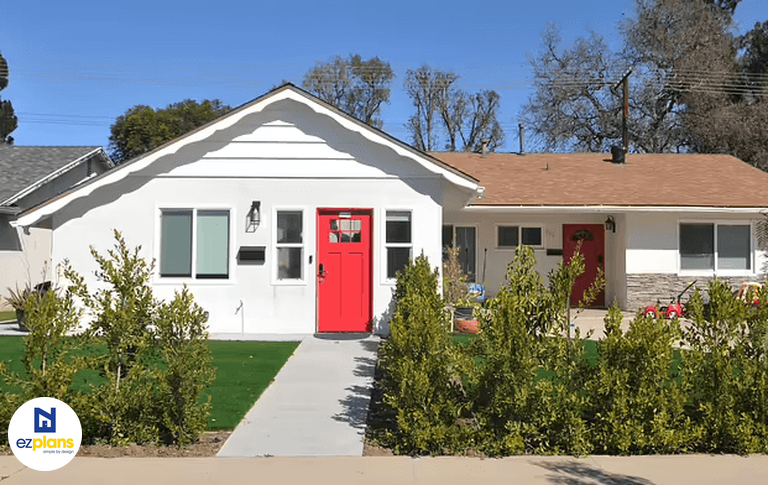
Garage conversion to an ADU with a red front door.

SB 543 – Streamlined Permitting & JADU Clarity

Faster Permit Reviews

  • Local agencies now have only 15 business days to conduct an initial completeness review of any ADU or JADU permit application – replacing the previous 60-day window.
  • If a local agency fails to respond within 15 business days, the application is automatically deemed complete by operation of law.
  • If an application is deemed incomplete, the city must provide a written list of deficiencies and a path to resolution.
  • Applicants now have a formal right to appeal an incompleteness determination, with a final determination required within 60 business days.

Updated Fee Exemptions

  • ADUs and JADUs under 500 sq ft of interior livable space are exempt from school impact fees.

Measurement Clarification

  • Square footage for ADUs and JADUs now refers specifically to interior livable space. Exterior walls, stairways, and other structural elements are excluded from the calculation.

AB 1154 – Owner-Occupancy and Rental Rules 

As of 2027 the owner-occupancy requirement for both the primary home, ADU and JADU is removed provided the JADU has its own bathroom. 
  • The rental  of  ADUs and JADUs must be for a term longer than 30 days.
  • Prohibits parking requirements for ADU’s that are 500 sq ft or less.
Garage conversion to an ADU with a covered patio leading to the main home.

AB 462 – Faster Coastal Zone Permitting

  • Coastal development permit applications for ADUs must now be approved or denied within 60 days of receiving a complete application.
  • The coastal permit process must run concurrently with standard planning and zoning review – ending sequential processing that could add months to timelines.
  • Failure to act within 60 days results in the coastal permit application being deemed approved.

AB 462 – Post-Disaster ADU Certificates of Occupancy

  • In counties subject to a governor-declared emergency after February 1, 2025 – including Los Angeles County following the Palisades and Eaton fires – an ADU may receive a certificate of occupancy even if the primary dwelling was destroyed by the wild fire.
  • Allows homeowners to live on site while rebuilding primary dwelling.
ADU Laws of 2025

SB 1211 – Multi-Family Properties

SB 1211 increases the maximum number of detached ADUs to eight, as long as the number of ADUs does not exceed the existing number of units within the multi-family dwelling and meets the setback and height requirements. These new ADU units can be built at existing uncovered parking areas and will not require off-street replacement parking.

AB 1033 – Allows the Sale of ADUs

AB 1033 allows homeowners to sell one or more ADUs separately from their primary residence. ADUs can be sold as condominiums separately from the primary dwelling with approval from the California Department of Real Estate. Homeowners may consider creating a Homeowners Association (HOA) between the primary residence and the ADU to manage the common property.
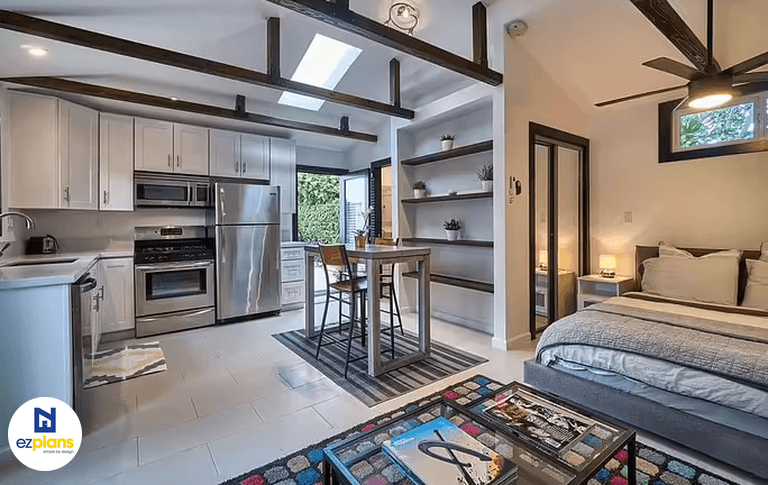
Interior of a studio ADU showing the bedroom, living and kitchen area layout.
Previous ADU Laws

SB 9 – Duplexes and Lot Splits

Senate Bill 9 allows converting existing homes occupied by a homeowner into a duplex if certain eligibility restrictions are satisfied. It also allows a single-family home lot to be split into two lots, and a duplex to be built on each lot, provided that the initial home is occupied by the owner as their primary residence for at least three years.

Some key points of SB 9:

  • Projects must be for residential use only.
  • Properties are within an urbanized area designated by the City and are not within agricultural, historic, and very high fire severity zones.
  • Parking requirements need to be met unless ½ mile from a public transportation stop.
  • The project will be subject to local short-term rental requirements.
  • May include connected structures (duplex) if they comply with building code safety standards.
  • If a lot is split, the project may be subject to City or County easements and must be roughly split in half.
  • Lots must meet minimum size requirements for a lot split.
  • The lot cannot be adjacent to another lot that has been split using SB 9.

Please note there are other exceptions and restrictions to SB 9.

Fire Sprinkler Requirement

SB 897 – Fire sprinklers are no longer required for the main dwelling when permitting an ADU in California as of 2027.
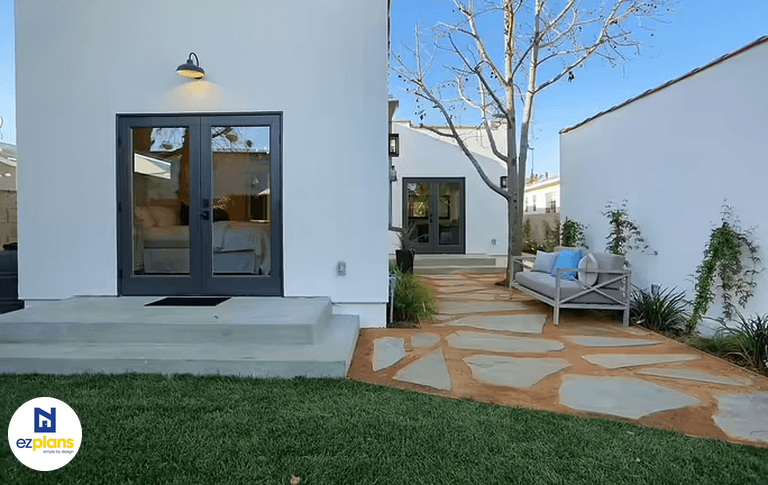
An attached ADU conversion with an addition to the main home designed to comply with ADU laws and regulations.
Next Steps

Because California’s ADU laws continue to evolve and each city or county may interpret them differently, it is more important than ever to work with a licensed architect who understands both the 2027 state laws and local requirements. EZ Plans is here to help. 

EZ Plans is a full-service architecture firm from design through permitting with experienced, licensed architects who are experts on the rules and regulations for both new ADUs, ADU conversions, and JADUs. We provide transparent and instant pricing for your ADU plans. 

Contact us today to start designing a floor plan and permit your ADU.

Find us on Facebook, Instagram, and LinkedIn to see what we’ve been up to, and to be inspired for your next home remodel or addition!